For suppliers asked to share emissions data
Carbon footprint report for your customer
Answer your customer’s carbon-data request with a clear Scope 1 and 2 emissions report. We calculate your company footprint using the GHG Protocol and the records you already keep.
- GHG Protocol
- Scope 1 and 2
- Sample PDF available

Know what they are asking for
Prepare the data, define the boundary
For SMEs answering supplier questionnaires, tenders or annual customer reviews. Check whether the buyer wants your company’s emissions, a product footprint or value-chain information: these are different calculations.
Calculated using the GHG Protocol
Scope 1 covers direct emissions from sources you own or control. Scope 2 covers purchased electricity, steam, heat and cooling. We document the boundary, activity data, emission factors and assumptions behind the totals.
- GHG Protocol Corporate Standard — sets the principles for a company greenhouse gas inventory.
- GHG Protocol Scope 2 Guidance — explains purchased-energy accounting, including location-based and market-based reporting where applicable.
Reporting year and company boundary
List the entities, sites and activities included. Note leased facilities and vehicles so their treatment can be agreed consistently.
Fuel and other direct emissions
Gather fuel quantities for boilers, machinery and vehicles, plus refrigerant top-ups and relevant process-emissions records. Include units and dates.
Purchased energy
Collect electricity, heating, steam and cooling bills or meter readings. Include supplier information and contractual instruments where relevant.
The customer’s requested output
Share the questionnaire, deadline and requested units. Confirm whether they need annual tCO₂e totals, intensity figures or a particular reporting format.
This service covers a company Scope 1 and 2 inventory. Scope 3, product carbon footprints, EPDs and independent assurance require a separate scope. VSME can reuse the results; it is not the calculation methodology.
See the deliverable
See what a carbon report looks like
Preview the cover and opening pages of the GHG Protocol sample, then request the complete report to explore the calculation and assumptions.
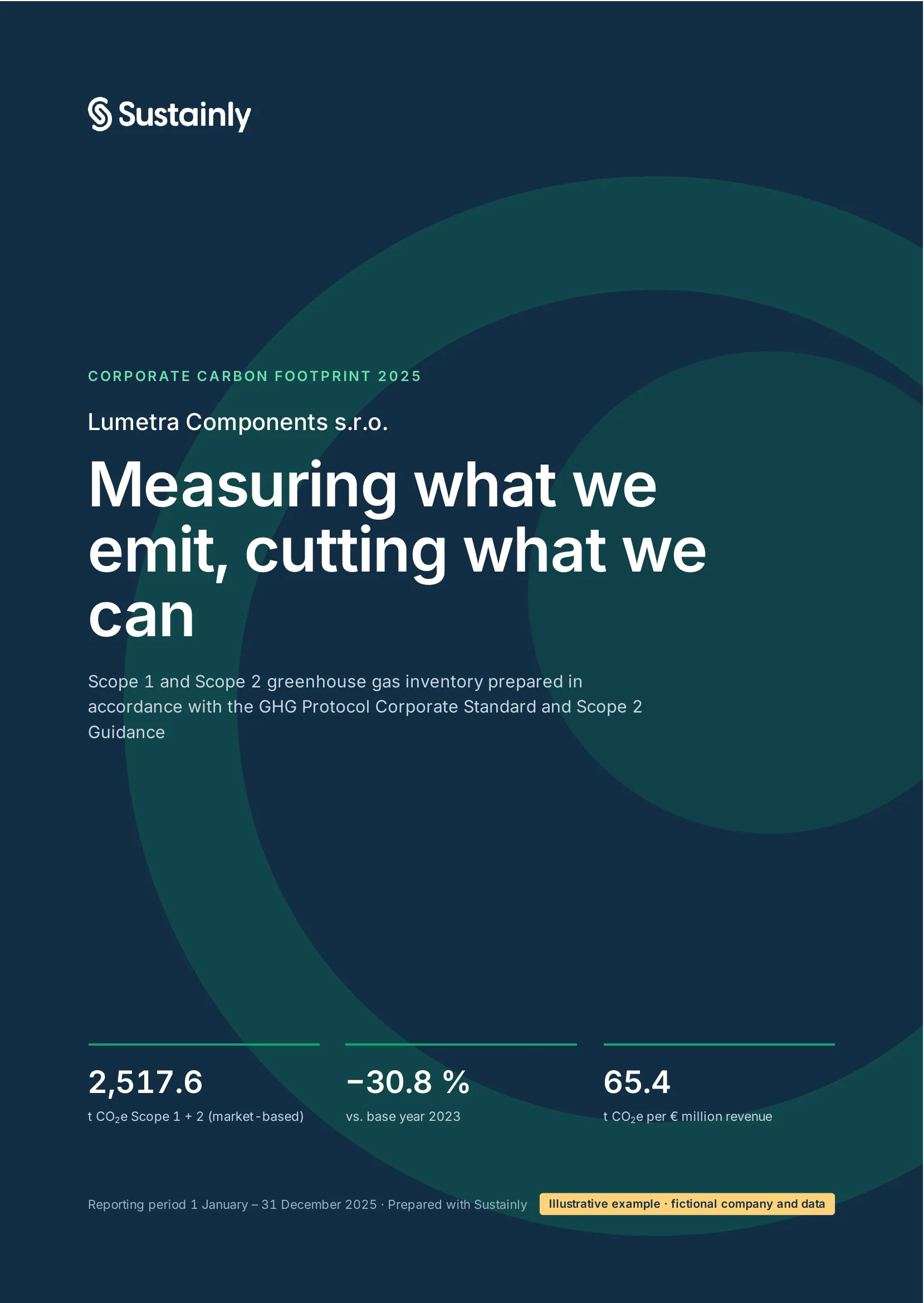
01Report overview 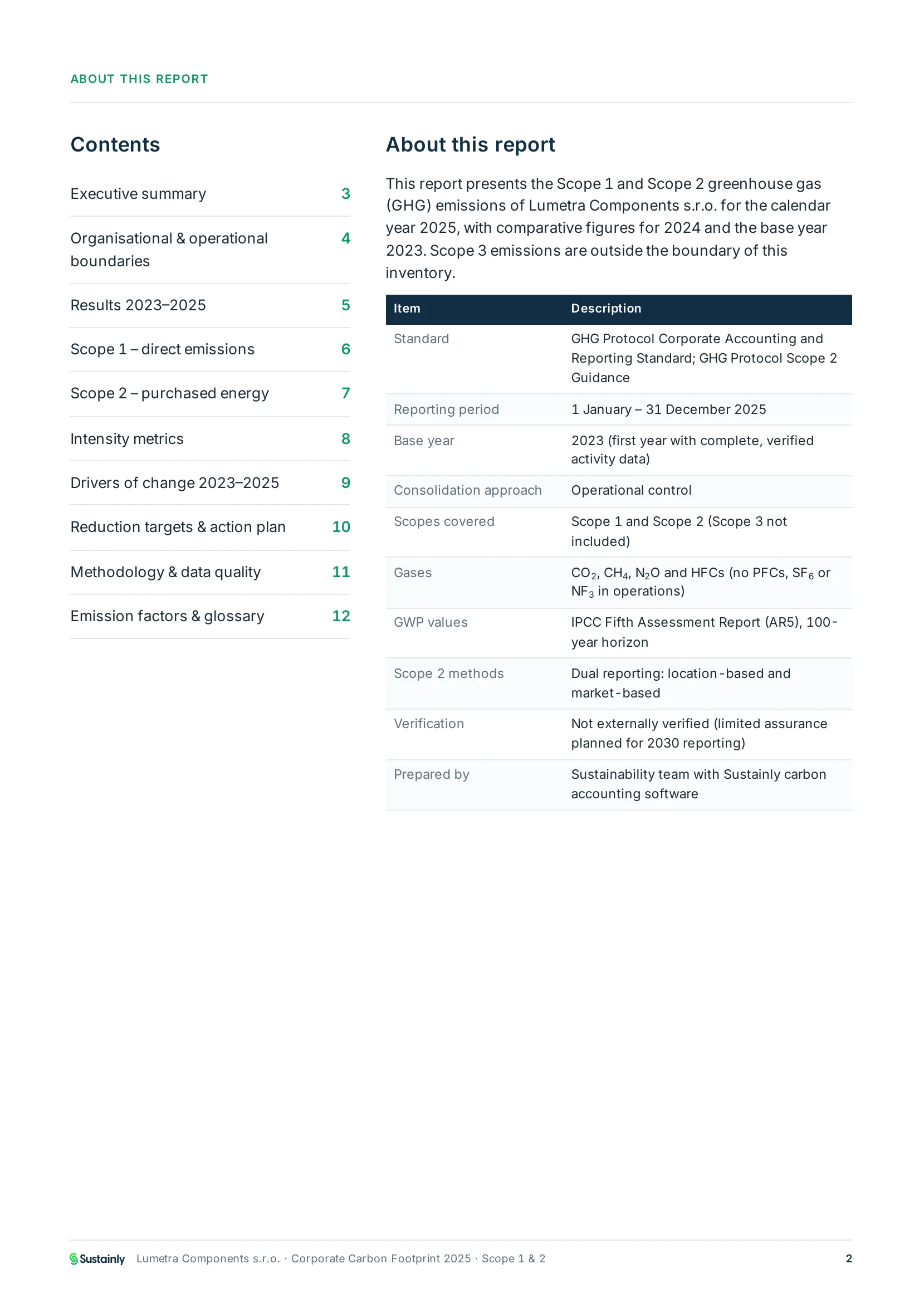
02Scope and methodology 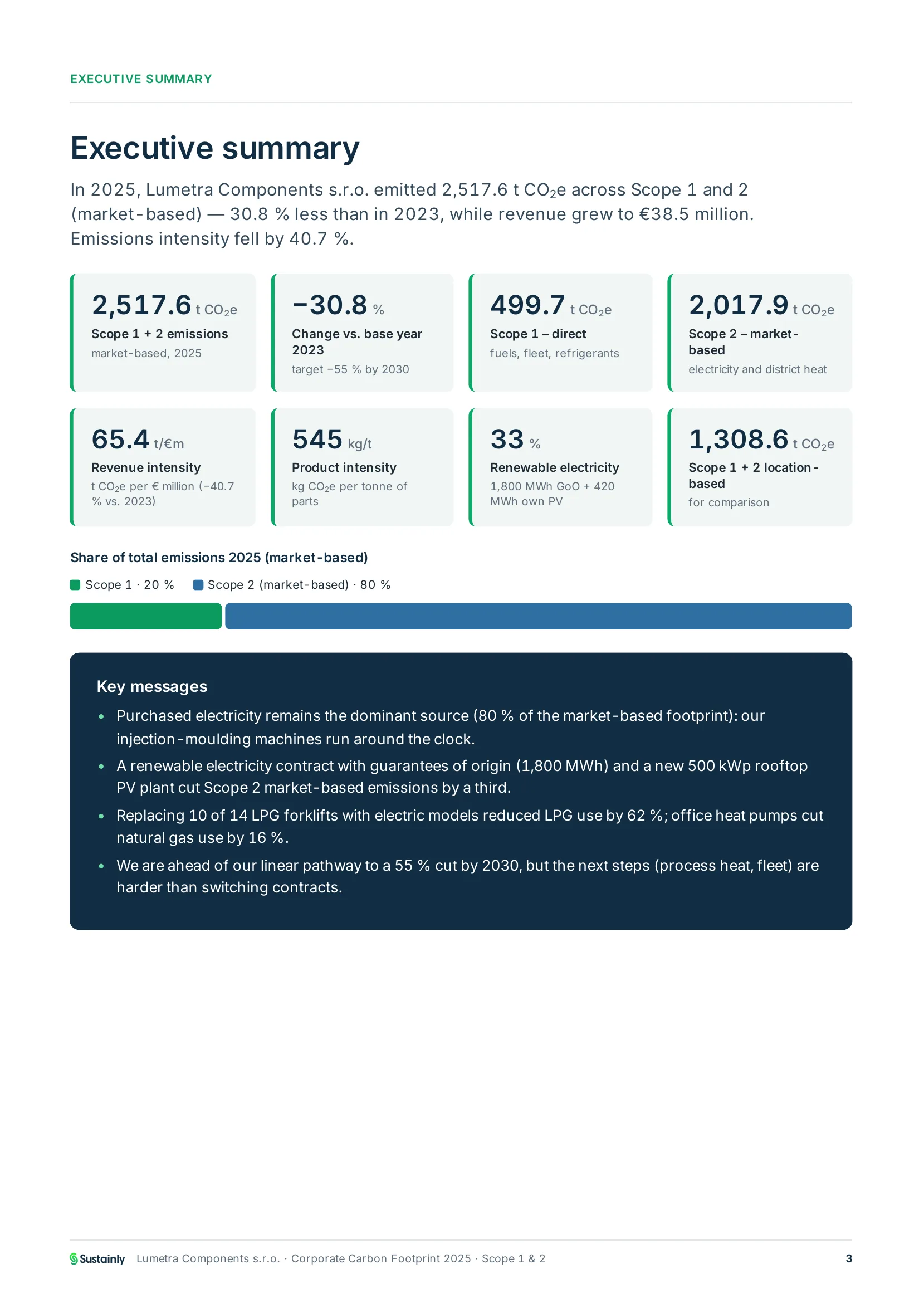
03Executive summary
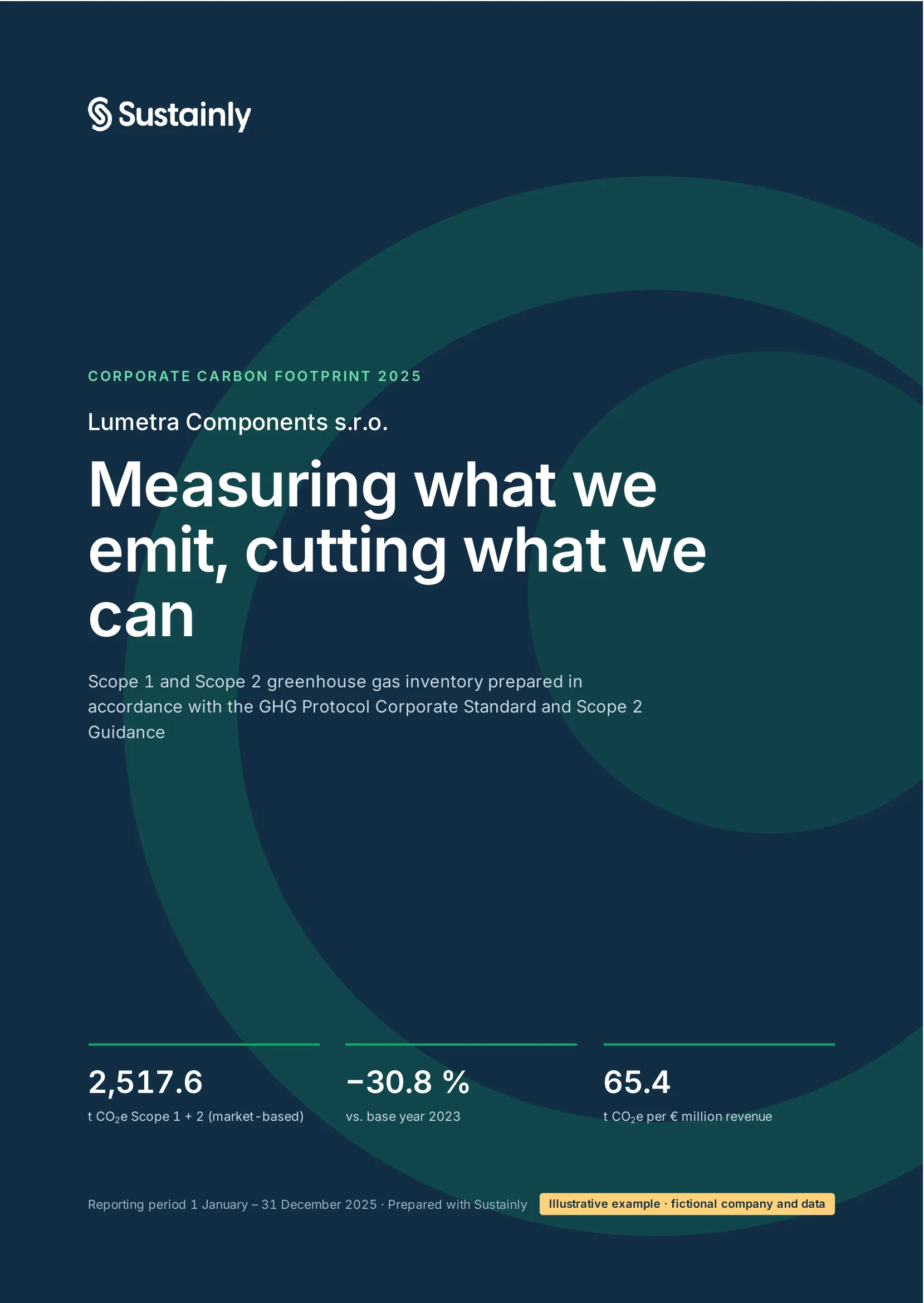
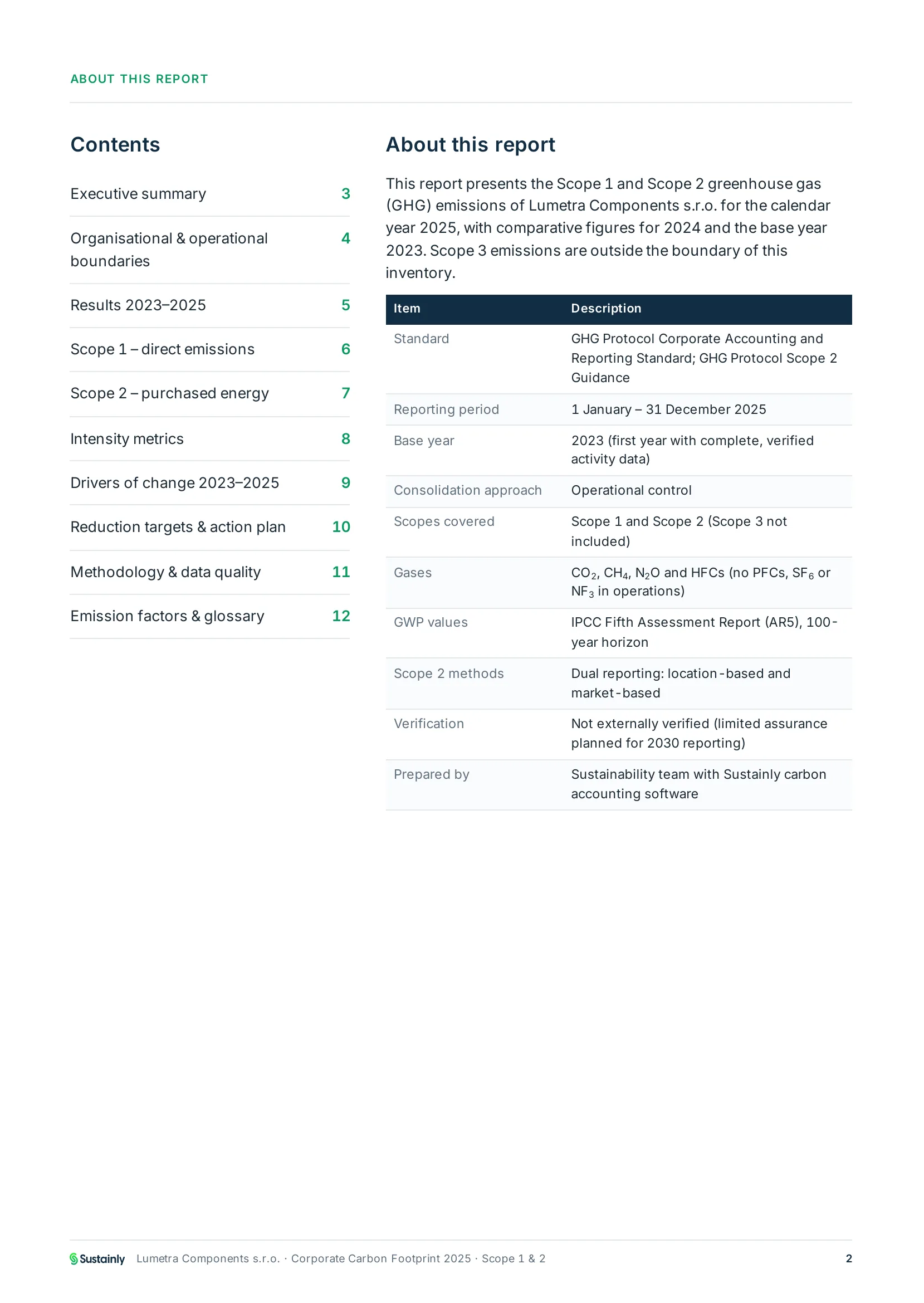
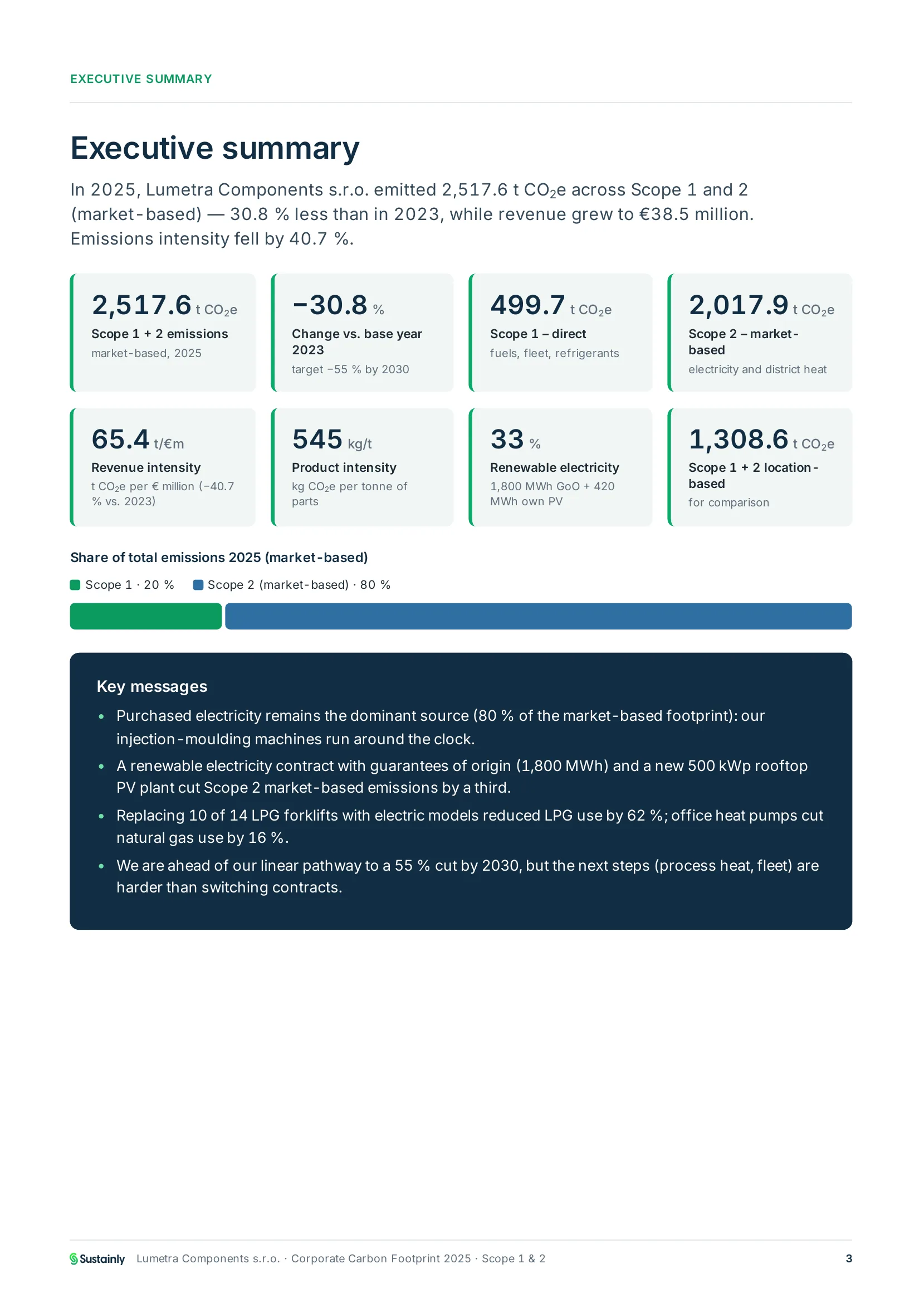
Illustrative sample only. The company and figures are fictional; your report will reflect your own data and agreed scope.
Get the carbon report sample
Enter your work email to unlock the full sample PDF here. We may follow up about your request.
How it works
The delivery date depends on your reporting boundary and data readiness. We confirm it after reviewing your records.
01
Scope the customer request
Agree the reporting year, entities and sites, and check that a company Scope 1 and 2 inventory answers the question.
02
Calculate and check
Map fuel and energy records to emission sources. Review gaps, factors and assumptions before finalising the totals.
03
Share and reuse the results
Receive the report with Scope 1 and 2 totals and supporting methodology. Use the figures in customer questionnaires or a wider ESG report.
What to send back to your customer
First confirm whether the buyer wants a company inventory, a product footprint or data for a particular questionnaire. Then match the response to that request.
- Attach the company emissions report with its reporting year, entities and sites, and calculation methodology.
- State Scope 1 and Scope 2 separately in tCO₂e. Identify the Scope 2 method or methods used; add intensity figures only with a clearly defined denominator.
- List exclusions, data gaps and any verification status. If the buyer requests product data or Scope 3, identify that as additional work.
Example covering message
Attached is the GHG Protocol company inventory for [company] for [year], covering [entities/sites]. Scope 1: [total] tCO₂e. Scope 2: [total and method] tCO₂e. [State exclusions and verification status.] Please confirm whether this meets your requested company-level disclosure or whether you also need product or value-chain data.
Replace every placeholder with information from your actual report. Never describe estimates as verified results.
Common questions
What does a Scope 1 and 2 report include?
Scope 1 covers direct emissions from owned or controlled sources, such as fuel use and refrigerant leakage. Scope 2 covers emissions from purchased electricity, steam, heat and cooling. The report records the boundary and assumptions used.
Can you work from invoices and meter readings?
Yes. Fuel quantities, energy bills and meter readings are useful starting points. We also check other relevant emissions sources and flag gaps. Missing data is not automatically treated as zero.
Is this the same as a product carbon footprint?
No. A company inventory covers an organisation over a reporting period. A product footprint follows the emissions associated with a product and its defined life cycle. If your customer asks for a product-specific result, we agree a separate scope.
Does this include Scope 3 or certification?
The standard service covers Scope 1 and 2. Value-chain Scope 3 calculations and independent verification are separate requirements. Following the GHG Protocol does not mean that GHG Protocol certifies the report.
How quickly can I send the report to my customer?
Share the customer’s deadline and the records available. We confirm a delivery date after assessing the reporting boundary and any data gaps.
What does a carbon footprint report cost?
The published carbon footprint plan is €200/report. We confirm the reporting scope and any additional requirements before starting.
Turn the customer request into a clear next step
Tell us what your customer needs and which records you have. We will confirm the scope, required data and delivery date.